


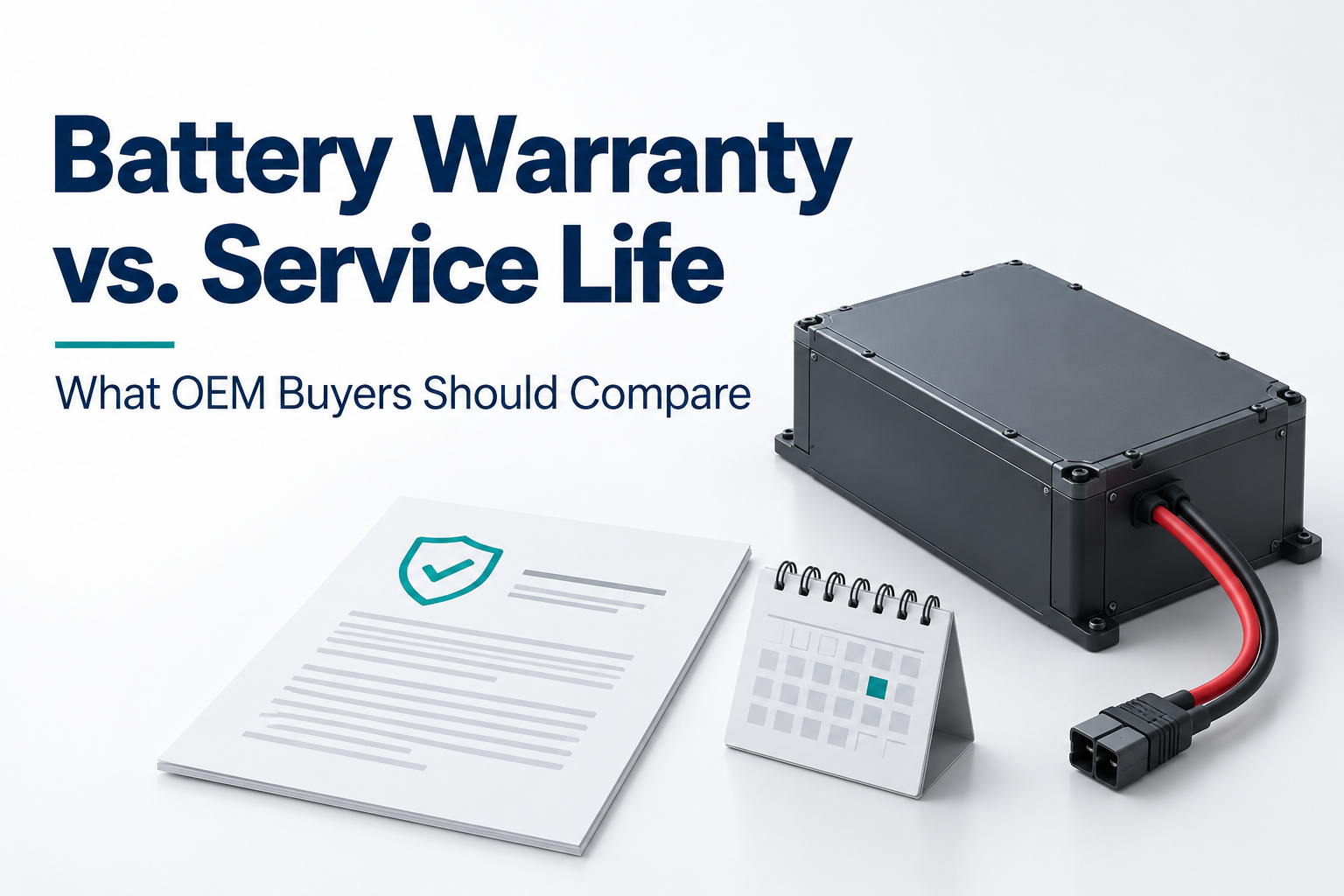
Battery warranty vs service life is an important distinction for OEM purchasing. This guide explains how commercial coverage differs from cycle-life results and application requirements. It covers warranty starting events, capacity commitments, matched test conditions, field-claim evidence, and replacement planning. A clearly labeled example shows why a laboratory capacity endpoint may not satisfy a device’s service requirement.
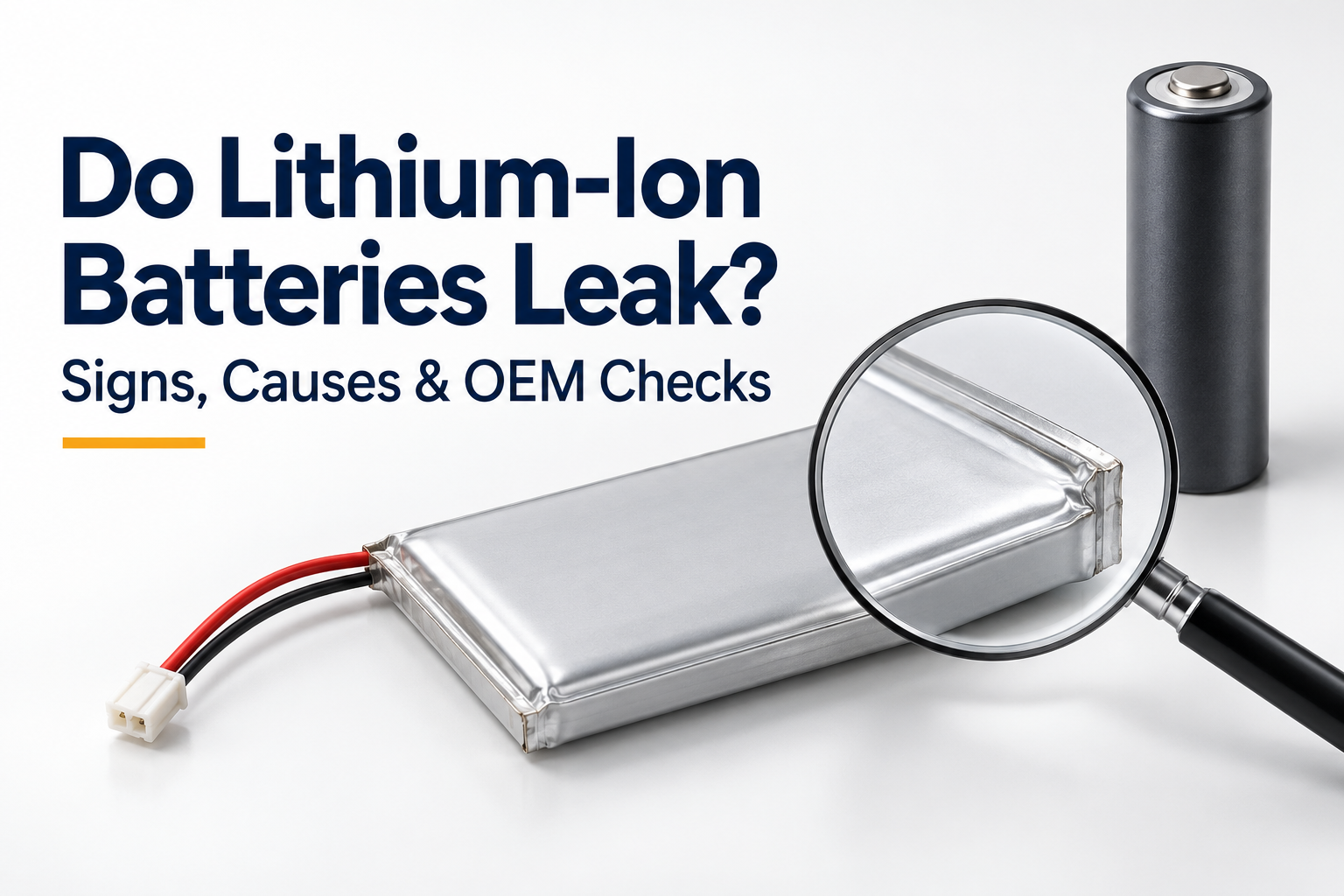
Do lithium-ion batteries leak? This guide explains possible leakage signs, causes, and the differences between electrolyte release, swelling, and external contamination. It also outlines what OEM teams should record, how to preserve useful failure evidence, and why normal voltage cannot confirm containment integrity. The focus is on appropriate incident handling and structured supplier investigation.
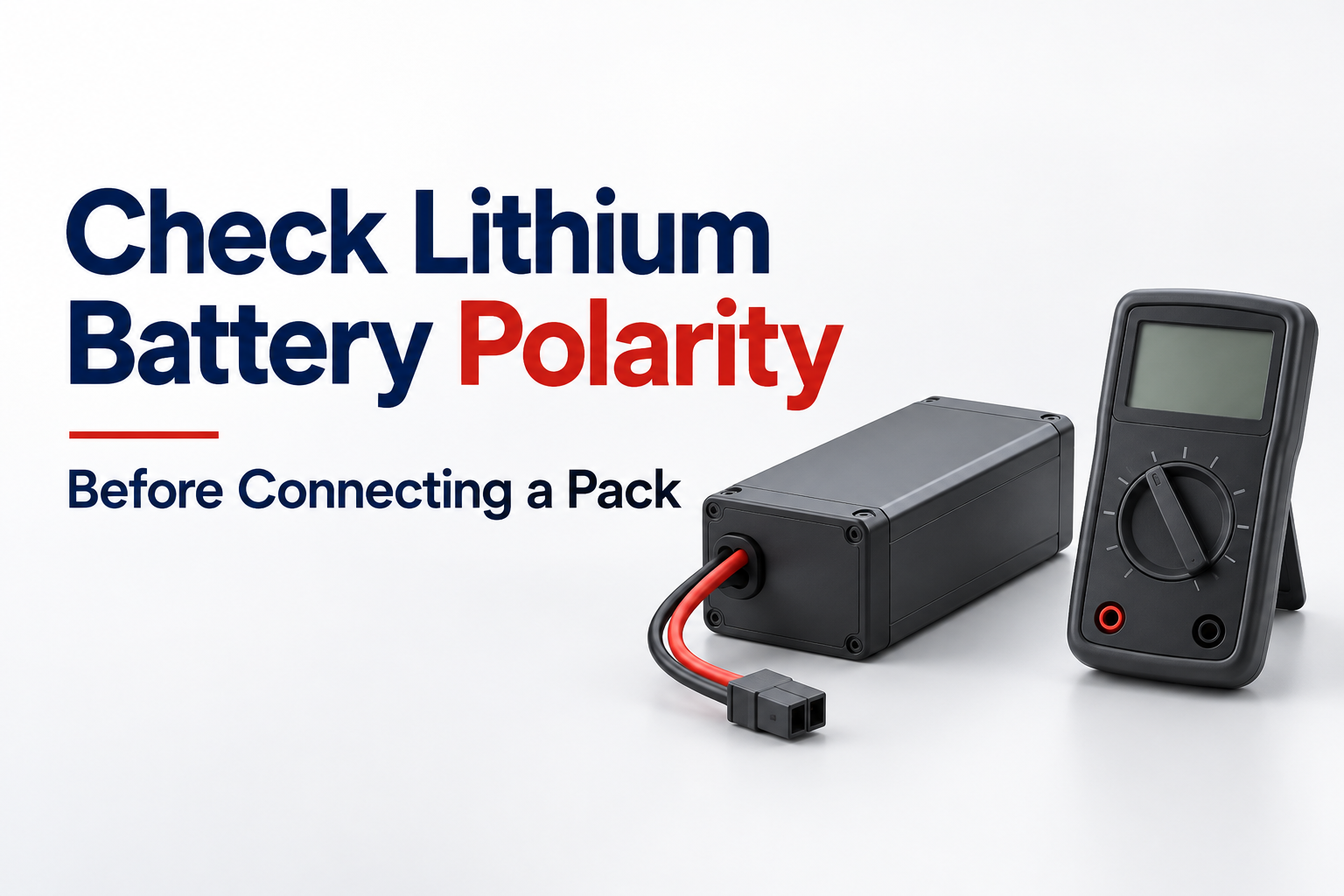
Learn how to check lithium battery polarity before connecting a pack to an OEM device. This guide explains how to identify output contacts, interpret connector viewing directions, configure a digital multimeter, and evaluate positive, negative, zero, or unstable readings. It also covers device-side pin mapping and the documentation needed for repeatable incoming inspection.